
A med spa business plan covers the same ground as any small business plan, but three things set it apart: who is allowed to own and run the practice, how much cash goes into equipment before the first patient walks in, and how revenue depends on repeat injectable visits. A generic template skips all three, and lenders, landlords and equipment financiers will ask about every one.
This guide walks through each section of the plan in the order a lender expects to read it, with what to include, the numbers to research, and the questions your plan needs to answer.
1. Executive summary
Write this section last, and keep it to one page. It is the only part many readers finish, so it should stand on its own and cover five things:
- The practice name, location and type of med spa, whether injectables-led, laser and skin-focused, wellness and weight loss, or a mix.
- The owner, medical director and lead injector, with one line on each person's credentials.
- Your core patient in a sentence, for example women 30 to 55 within a 15-minute drive who already buy professional skincare.
- The total startup budget, how much you are putting in, and how much you are asking for.
- Projected first-year revenue, the month you expect to break even, and your year-three revenue target.
If you cannot fill in all five yet, that tells you which sections below need more work.
2. Company description and ownership structure
This section says what the business is and, more importantly for a med spa, how it is legally put together. Readers want to see that the structure fits your state before they look at any revenue numbers.
Cover these points:
- The legal entity, who owns it, and the state rule that structure follows. Many states follow the corporate practice of medicine (CPOM) doctrine, which bars non-physicians from owning a business that delivers medical care. In strict states such as California, Texas and New York, a non-physician owner typically uses two entities: a physician-owned professional corporation for clinical care, and a management services organization (MSO) that runs the business side under a management services agreement. Other states allow nurse practitioner or non-physician ownership with physician oversight.
- Who your medical director is, their specialty, how many hours a month they commit, and how they are paid (a flat monthly fee, hourly, or equity).
- How clinical oversight works day to day: who performs good faith exams, who can inject, and how supervision and delegation are handled.
- One or two sentences on what makes the practice different, such as a results-first injector team, a skin-health focus, or a membership model.
- The location or target area, square footage, number of treatment rooms, and lease terms.
3. Market analysis
The market section proves there is enough local demand to fill your schedule, and shows you know who you are competing with. Start with the national picture, then spend most of the section on your trade area.
On the national side, American Med Spa Association (AmSpa) figures show the average single-location med spa earned $1,398,833 in 2024, up about 7% from $1,307,587 in 2023. U.S. locations grew from 4,200 in 2017 to 10,488 in 2023, 81% of med spas are single-location practices, and 18% of active med spas opened in 2023. Use these as context, not as your own forecast. A new practice will not hit the national average in year one.
Then define your trade area as the drive time most patients will accept, usually 10 to 20 minutes in a suburb, and document:
- Population and median household income within that radius (U.S. Census data is free).
- The number of women aged 30 to 64, the core injectable market.
- Growth signals such as new housing, office parks, or retail development.
Next, list every med spa, dermatology practice and plastic surgery office in that radius. For each one, note services, Botox price per unit, membership offers, Google rating and review count, and how busy their online booking calendar looks. Finish with a short paragraph on the gap you will fill, whether that is price, specialty, convenience, or patient experience.
4. Services and pricing
List what you will offer at opening and what you will add later. Most new med spas launch with a tight menu built around injectables, then add devices once demand and cash flow justify the equipment cost.
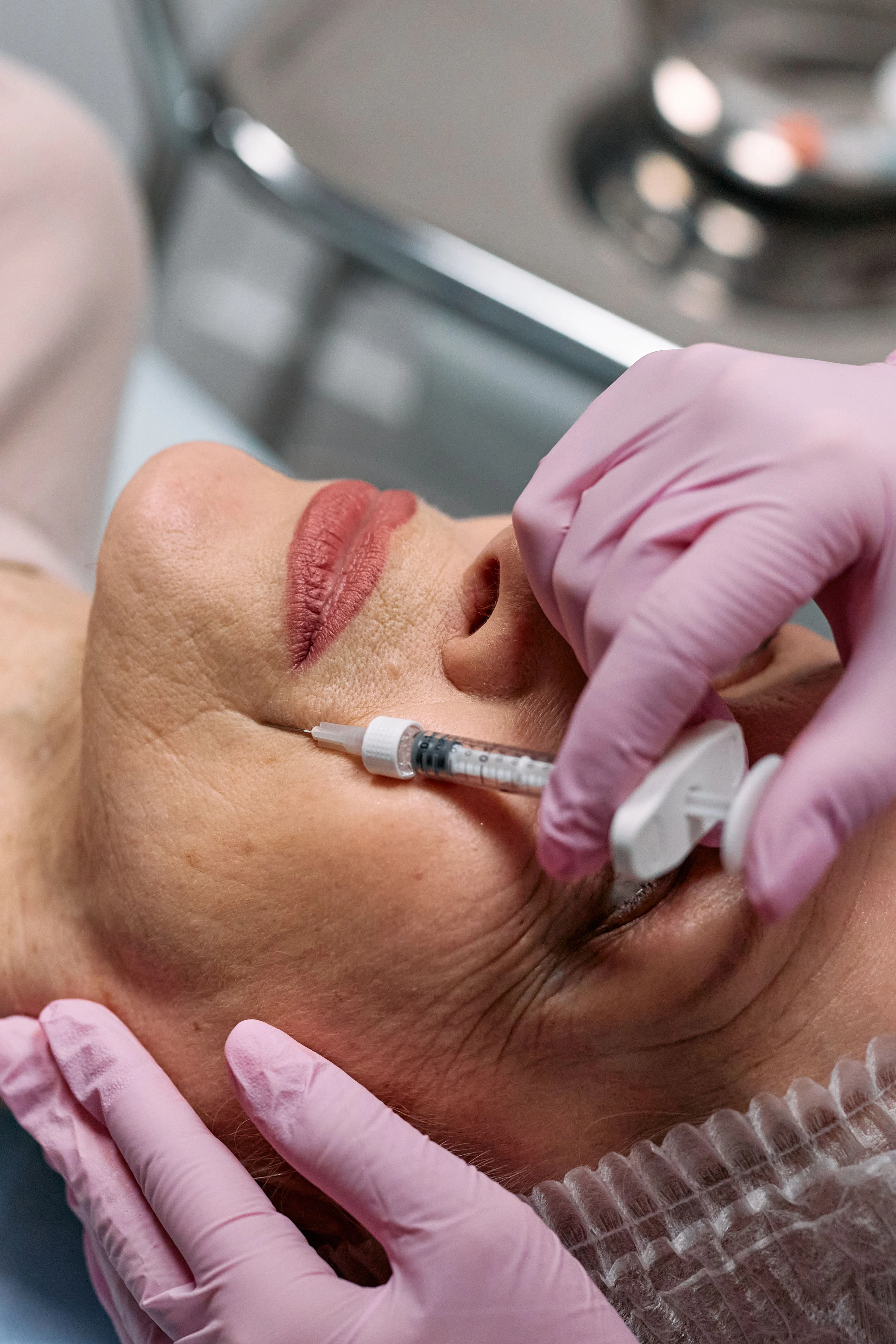
For each service, show how it is priced, what it costs you to deliver, and who can perform it:
| Service | Priced by | Main direct costs | Who performs it |
|---|---|---|---|
| Neurotoxins (Botox, Dysport, Xeomin) | Per unit | Product, injector time | Licensed injector (NP, PA, RN under supervision, or physician, per state rules) |
| Dermal fillers | Per syringe | Product, injector time | Licensed injector |
| Chemical peels and facials | Per treatment | Backbar product, staff time | Esthetician or medical esthetician |
| Microneedling and RF microneedling | Per treatment or package | Disposable tips, device payments | Varies by state and device |
| Laser and IPL treatments | Per treatment or package | Device payments, maintenance | Varies by state and device |
| Weight loss and wellness | Monthly program | Medication, provider time | Prescribing provider |
| Retail skincare | Per product | Wholesale cost | Front desk and providers |
Two things readers look for here. First, your revenue mix: injectables usually make up the largest share, so show you are not depending on one service. Second, recurring revenue: memberships, treatment packages and retail all smooth out monthly cash flow, and should appear in your pricing plan from day one.
Set prices from your competitor research in section 3, not from national averages. A per-unit toxin price within a dollar or two of local competitors, paired with a clear reason to choose you, is easier to defend than a deep discount.
5. Staffing and operations
This section shows who does the work and how a patient moves through the practice. Staffing is usually the largest expense after rent and product, so readers check it closely.
A lean opening team often looks like this:
- A medical director (part-time, contracted)
- One or two injectors
- One esthetician or medical esthetician
- One front desk or patient coordinator, who also handles retail and follow-up
For each role, give the start date, pay model (hourly, salary, commission, or a base plus commission), and the revenue that justifies adding the next hire. A common trigger is adding a second injector once the first is consistently booked above 75% to 80% of available hours.
Next, describe the patient journey from first contact to rebooking:
- Online booking or phone inquiry
- Intake forms and medical history, completed before the visit
- Good faith exam, where your state requires one
- Consultation and treatment
- Aftercare instructions and a follow-up message
- Rebooking at checkout, timed to the treatment cycle (about every three to four months for neurotoxins)
Also list the systems that support it: booking and EMR software, payment processing, product ordering and inventory tracking, and how you will handle patient records.
6. Marketing and patient acquisition
The marketing section answers one question: where will your first 300 to 500 patients come from? Break it into three phases.
Before you open
- Claim and complete your Google Business Profile, and get your website live with online booking.
- Build a waitlist through a founding-member offer or an opening event.
- Bring over any patients the injectors already treat, where they are free to do so.
The first six months
- Local search and Google reviews, which drive a large share of med spa bookings. Set a target, such as 100 reviews in six months, and ask at checkout.
- Paid social and search ads with a monthly budget and a target cost per new patient.
- Partnerships with nearby gyms, salons, bridal shops and dental offices.
Keeping patients coming back
Acquiring a patient costs far more than keeping one, so show how you will bring people back: rebooking reminders tied to treatment cycles, a membership program, email and SMS follow-ups, and a referral reward.
Close the section with a simple table of channels, monthly spend and expected new patients per month. Lenders like seeing marketing spend linked to a patient number they can check later.
7. Startup costs and funding
Most single-location med spas cost between $150,000 and $500,000 to open. A lean, injectables-led practice with one or two treatment rooms sits near the low end, while a practice launching with lasers or body-contouring devices usually lands at $300,000 or more.

Break your budget into line items like the ones below, then replace each range with real quotes from contractors, landlords and equipment vendors:
| Cost category | Typical range |
|---|---|
| Lease deposit and first months' rent | $10,000 to $45,000 |
| Buildout and renovation | $50 to $200 per sq ft |
| Medical equipment and devices | $97,000 to $500,000+ |
| Opening inventory (injectables, consumables, retail) | $5,000 to $15,000+ |
| Licensing, legal and entity setup | $5,000 to $25,000 |
| Working capital reserve (3 to 6 months) | $60,000 to $200,000 |
The working capital line is the one first-time owners most often cut, and it is the one that matters most. Revenue builds slowly in the first months, so hold three to six months of operating expenses in reserve.
Finally, state how much you are contributing and where the rest comes from. Common sources are SBA 7(a) loans, equipment financing or leasing (which spreads device costs over three to five years), and partner or investor equity. If an investor is involved, the ownership structure from section 2 has to allow it.
8. Financial projections
Projections should be built from capacity, not from a target number. Lenders discount any forecast that starts with the revenue the owner hopes for.
Start by building revenue from provider hours. For each provider, estimate:
Monthly revenue = bookable hours × utilization rate × average revenue per hour
A realistic utilization curve for a new practice might start near 30% in month one and climb toward 70% to 80% by the end of year one. Add retail and membership revenue as separate lines.
You will need three statements: a monthly profit and loss for year one, then annual figures for years two and three; a cash flow forecast, which matters more than the P&L in the early months; and a break-even analysis.
To find your break-even point, divide your fixed monthly costs (rent, salaries, medical director fee, software, insurance, loan payments) by your contribution margin, which is revenue minus product and commission costs, as a percentage. One industry guide puts typical monthly operating costs for a two-room med spa at $35,000 to $60,000, with break-even around $80,000 to $100,000 in monthly revenue.
Then show the downside. Add a conservative scenario with slower patient growth, for example 25% below your base case, and show that your working capital reserve still covers the gap. Established med spas are often cited at 20% to 25% profit margins, based on AmSpa data, but a new practice should plan to run below that through its first year.
Common mistakes to avoid
- Buying devices before there is demand for them. A $100,000 laser on a five-year payment needs steady bookings from day one, so launch injectables-first and add devices once the demand is proven.
- Cutting the working capital reserve to pay for a bigger buildout. Most early cash problems come from a slow ramp-up, not overspending.
- Signing a lease or taking investor money before the ownership structure is settled, which can force an expensive restructure later.
- Basing projections on national averages. The $1.4 million figure describes established practices, so use your own capacity math for years one to three.
- Planning how to win patients but not how to keep them. Without rebooking, memberships and follow-up, the plan will show high marketing costs and flat revenue.
- Treating the plan as a one-time document. Update it every quarter against actual numbers, since it becomes your operating budget once you open.
Frequently asked questions
How long should a med spa business plan be?
For a bank or SBA lender, 15 to 30 pages plus financial statements is typical. An internal plan for your own use can be shorter, but it should still include the full financial model.
Do I need a business plan to get an SBA loan?
In practice, yes. Lenders reviewing an SBA 7(a) application will expect a written plan with projections, and a med spa plan will be checked for ownership structure and medical oversight.
How long does it take to open a med spa?
Most owners should plan for six to twelve months from decision to opening day. Entity setup and a medical director come first, then the lease, buildout and equipment, then hiring, training and a soft launch.
Should I lease or buy equipment?
Leasing or financing lowers your upfront cost and preserves working capital, which matters most in year one. Buying makes more sense once a device has a proven booking history.
Can I use a free business plan template?
A generic template is a fine starting point for layout, but it will not cover ownership structure, medical oversight or device financing. Add those sections yourself using the outline above.