

A cancellation creates two jobs for the front desk: release the booking correctly and find someone who can actually use the time. A list of names is not enough. The replacement client needs to want the right service, accept the available provider and arrive with enough notice for the appointment to work.
A useful spa waitlist turns those conditions into a repeatable process. It can recover otherwise empty hours without sending a discount to the entire customer database. It also gives the owner better information about demand: which services people are waiting for, which times they will accept and which openings remain difficult to fill.
Separate an earlier appointment from an additional visit
Start by distinguishing two types of request. One client wants a service but has no booking. Another already has an appointment next week and would prefer an earlier date. Both can fill tomorrow's cancellation, but only the first clearly adds a visit to the existing schedule.
Moving next week's client forward creates another opening. If that second opening remains empty, the business has shifted revenue between dates rather than recovered an additional sale. Keep the original booking reference with any move-up request, and track the slot released by the move.
This distinction matters when reporting results. A dashboard showing ten waitlist bookings may include six new visits and four date changes. The front desk did useful work in both cases, but the owner should not multiply all ten by the menu price and call the result additional revenue.
Collect the information needed to make a real match
Ask clients for a small set of practical preferences when they join. Record the requested service, acceptable providers, location, date range, time windows and minimum notice. Someone who can arrive within an hour belongs in a different group from someone who needs a day's notice to arrange childcare.
Service and duration: include preparation, turnaround and any required room or equipment time.
Provider flexibility: distinguish a named provider from any suitably qualified team member.
Availability: use specific windows rather than a note saying “flexible.”
Contact preference: record the channel the client has agreed to use for these notifications.
Request expiry: identify when the client no longer wants an opening.
Keep sensitive intake information in the appropriate client record, not a broadly shared waitlist spreadsheet or notification. For an aesthetic clinic, an opening does not remove the need for its usual consultation, screening, consent or preparation process. The scheduling team should know which bookings require a clinical check before an offer can become a confirmed appointment.
Refresh stale requests. A client looking for a facial before a wedding does not need messages after the event. Ask whether an earlier appointment replaces an existing booking, and remove or update the waitlist request once the client's need has been met.
Write the cancellation-to-offer workflow
Choose one person on each shift to own incoming cancellations and waitlist follow-through. The process should begin when the cancellation is recorded, not when someone happens to notice a gap on the calendar.
First, confirm the usable opening. A 60-minute gap may not accommodate a 60-minute service if setup or cleaning time is missing. Check the provider, room and equipment together. Do not compress treatment time or overbook another resource to make the calendar look full.
Next, filter for clients whose preferences match. A practical starting rule is oldest suitable request first, with exceptions documented for operational requirements. If the business uses membership priority, explain that rule when clients join rather than inventing it during a busy shift.
Then send an offer with the date, start time, service, provider, price and booking action. Decide whether it is an exclusive temporary hold or an invitation to book an opening that remains available to others. The wording and the software must agree.
For a manual exclusive offer, an example might read: “The 60-minute facial you requested is available with Maya tomorrow at 2 p.m. for $150. We can hold it until 11:30 a.m. today. Please call us to confirm before then.” Those details are illustrative. Only promise a hold if staff have actually reserved the slot and can release it at the stated time.
If several clients receive an open invitation, say that booking is subject to availability and require a completed confirmation. An unread text, a clicked link and a confirmed appointment are different events. Once booked, stop further offers for that opening and resolve any replies already in progress.
Check what your software really automates
Some booking systems collect requests, some notify matching clients, and some can move clients into openings under configured rules. Do not assume the word “waitlist” means automatic booking.
Square's appointment-waitlist documentation describes clients joining through online booking, staff adding requests and messaging from the dashboard or app. It also describes availability preferences and an optional opening notification. Its published guidance says clients are not sent another opening notification if they were already notified within the previous six hours. Check the current plan requirements and settings before relying on those functions.
Mindbody's appointment guide likewise describes appointment waitlists for requested times that are unavailable. Appointment behavior should be checked separately from class-waitlist rules. A group class with interchangeable places is a different scheduling problem from a treatment requiring one particular provider and room.
Before rollout, run a controlled test using staff test records and a non-client appointment slot. Check who receives an offer, whether the slot is held, what happens when two people respond and whether an existing booking is preserved until the move is confirmed. Also check how staff can stop notifications and remove an expired request. Document the results so the next shift does not have to guess.
Measure contribution recovered, not just the menu value
The following example is hypothetical, not a spa-industry benchmark. Suppose a spa records 20 cancelled appointments that still have enough notice and suitable resources to be offered again. Its waitlist fills eight of them, and all eight replacement clients attend.
At $150 per visit, the replacement appointments produce $1,200 in sales. Assume each completed visit has $55 of costs that arise because the service is delivered, including the relevant variable labor, supplies, laundry and processing costs. The eight visits contribute $760 before other operating costs: eight multiplied by $95.
If the spa spends an additional $80 on administration and messaging for this recovery effort, the remaining contribution is $680. That is not net profit. Rent, other payroll, insurance and the rest of the business still have to be covered. If staff were already being paid regardless of attendance, avoid treating the same guaranteed wages as both an incremental cost and a separate deduction.
Now suppose the same eight appointments were filled with a blanket 20% discount. At $120 per visit and unchanged $55 delivery cost, contribution before the additional $80 becomes $520. After that cost, it is $440. In this example, discounting sacrifices $240 when the same clients would have booked at the regular price.
The comparison does not prove that discounts never work. If a promotion attracts visits that otherwise would not happen, evaluate that separate scenario with its actual volume and costs. Start by offering the appointment the client already requested at its normal price, then measure whether a price incentive is needed.
Keep a small weekly scorecard
Track eligible cancelled openings, openings offered, confirmed replacements and completed replacement visits. Use completed replacements divided by eligible openings as the attendance-based recovery rate. In the example, eight divided by 20 is 40%. Record the eligibility definition so a change in reporting cannot masquerade as improved performance.
Add time from cancellation to first offer, time from offer to confirmation, and the proportion of offers declined or unanswered. Break results down by notice period and service. A same-day massage gap and a facial cancelled three days ahead should not be judged as if they had the same chance of being filled.
Flag move-up bookings separately and follow the opening they leave behind. Track realized sales after discounts and refunds, along with incremental delivery and administration costs. Keep cancellation fees separate from replacement-service revenue; do not count a retained deposit twice. Your cancellation policy should make the treatment of charges clear rather than leaving staff to improvise when a slot is refilled.
Use the waitlist to improve the next schedule
Review unmet requests alongside unused capacity. If ten clients want Thursday evenings but Tuesday mornings remain empty, the issue may be schedule fit rather than a shortage of total hours. Test a small change in availability before adding a permanent shift.
Begin with one service group and one location for a two-week operational trial. Keep prices steady, record each opening and review exceptions with the front desk. Extend the process only after confirmations, resource checks and request cleanup work reliably. A shorter, current waitlist that produces attended appointments is more useful than a large database of people who once expressed interest.
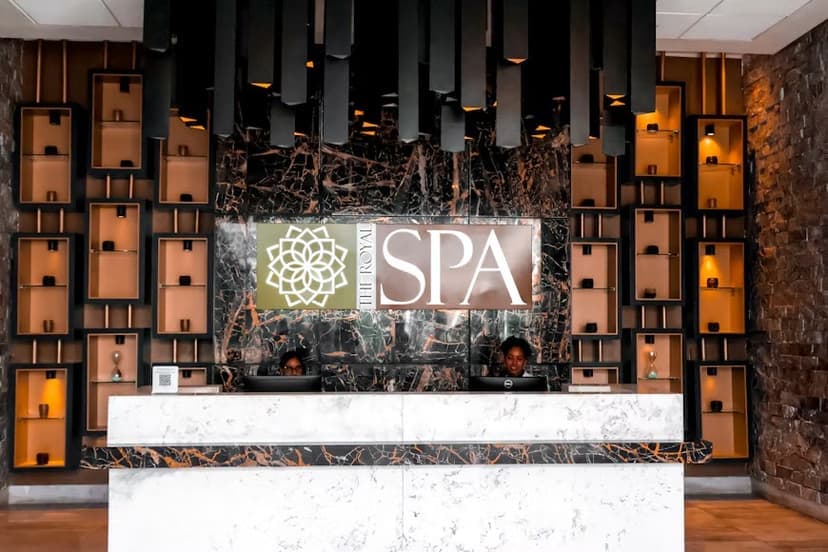
Illustrative photograph: the Royalton Bavaro spa reception in the Dominican Republic, by Meg von Haartman on Unsplash, used under the Unsplash License. The pictured spa is not the hypothetical business in this article.