

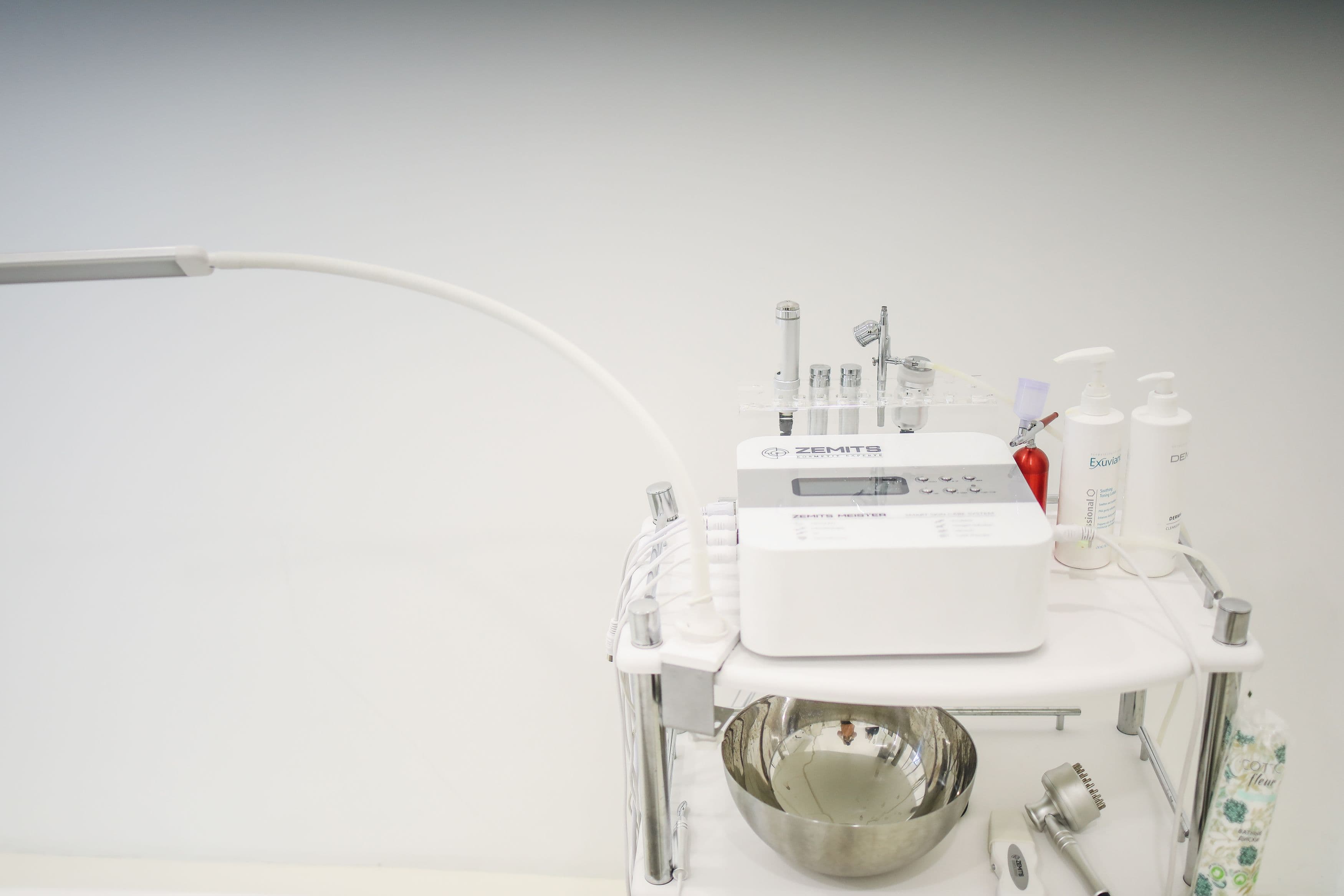
A treatment device can look affordable when its monthly payment is compared with a full appointment book. The decision changes when the clinic includes launch costs, discounted packages, unused capacity and the contribution it gives up from existing services.
A useful med spa equipment ROI analysis starts with three questions: how much cash must leave the business, how much each completed treatment will contribute, and how many suitable clients the team can realistically serve. Owners should answer those questions before negotiating financing. A lower payment cannot rescue a service that lacks demand or does not fit the practice.
The framework below is a first-pass business model for U.S. spa and aesthetic-clinic operators, not a recommendation to buy a particular device. Every dollar amount and treatment volume in the worked example is hypothetical, not an industry benchmark or a forecast of clinical results.
Confirm the service is appropriate before modeling sales
Start with the exact service, device model and intended use. For a medical aesthetic service, have the responsible clinical leader review patient suitability, evidence, risks, training and the proposed care pathway before anyone builds a sales target.
The FDA explains that aesthetic devices may be regulated according to their intended use and effects on the body's structure or function. Regulatory requirements are not identical for every item sold to a spa.
For regulated equipment, verify the manufacturer's claims against the relevant FDA approval or clearance records and labeling. Do not treat the phrases “FDA registered” or “FDA certified” as proof of clearance or approval. The FDA expressly distinguishes registration and listing from authorization.
Separately, confirm applicable state licensing, scope-of-practice and supervision requirements with qualified advisers, and obtain an insurance coverage answer for the proposed service. A vendor's training certificate should not be the only basis for deciding who may provide it. Keep clinical eligibility decisions separate from revenue goals.
Build the full acquisition budget
Ask for a written, itemized quote rather than entering the device's advertised price as the entire investment. Your opening cash budget should identify:
Purchase and delivery: equipment, required attachments, freight, installation and applicable taxes.
Room preparation: any electrical, ventilation, plumbing, furniture or other changes the installation actually requires.
Launch preparation: paid training time, travel, initial supplies, photography, service-page work and an approved launch campaign.
Working cash: money to carry the service through its ramp-up, including payroll and recurring bills before receipts cover them.
Separate spent launch costs from working cash held in reserve. A reserve is liquidity the business needs available, not automatically an expense. Include supplies when paid in the cash-flow schedule, without counting the same opening stock again as a second cash purchase when it is used.
Request the recurring-cost schedule too: service contracts, software, consumable minimums, replacement parts, calibration, insurance changes and refresher training. Check whether a low introductory charge increases after the first year. Where a cost is uncertain, keep it visible as an assumption to resolve.
Calculate contribution from a completed treatment
Use the amount the clinic expects to collect for a delivered session after discounts and refunds, rather than the menu price. Allocate package pricing across the included sessions. A prepaid package produces cash early but also creates future treatment obligations; counting the full package receipt and each redeemed session as new revenue would overstate the opportunity.
Then subtract the costs that increase with that treatment. These may include a single-use tip or cartridge, other consumables, incremental provider compensation and related payroll costs, card-processing fees and any per-treatment software charge. Keep fixed staffing commitments in the monthly-cost bucket instead. Each cost belongs in the model once.
Contribution per treatment = net session receipts minus variable treatment costs.
In the hypothetical example, the clinic collects $300 per completed session after discounts and refunds. Variable costs total $100, including processing fees and incremental labor. Each session therefore contributes $200 toward the service's fixed costs and the recovery of its initial investment. That $200 is not net profit.
For a broader view of the business, the med spa profit-margin guide explains why service contribution and whole-clinic operating profit need separate calculations.
Separate operating break-even from equipment payback
The Small Business Administration's break-even framework divides fixed costs by the selling price less variable cost per unit. Applied to a new service, it helps estimate the volume needed to cover that service's recurring incremental costs.
Assume the hypothetical clinic spends $60,000 upfront on equipment and launch preparation, excluding its separate working-cash reserve. Its additional recurring fixed cash costs are $1,500 per month. At $200 contribution per completed session:
Recurring operating break-even: $1,500 ÷ $200 = 7.5 sessions, so at least eight completed sessions a month.
At 30 sessions: 30 × $200 − $1,500 = $4,500 monthly operating cash contribution; $60,000 ÷ $4,500 gives about 13.3 months of simple payback.
At 50 sessions: 50 × $200 − $1,500 = $8,500 monthly operating cash contribution; simple payback is about 7.1 months.
At 70 sessions: 70 × $200 − $1,500 = $12,500 monthly operating cash contribution; simple payback is 4.8 months.
Eight sessions only cover the modeled recurring costs. They do not recover the $60,000 purchase and launch outlay, cover the rest of the clinic's overhead or establish that the investment is worthwhile.
These payback estimates assume the stated volume begins immediately and stays constant. They exclude financing, taxes, displaced business, resale value and later replacement costs. Simple payback measures time to recover an outlay; it is not a complete return-on-investment measure and does not account for the time value of money. Have an accountant evaluate the full investment and tax treatment before signing.
Replace the full calendar with an evidence-based forecast
Build demand from identifiable sources: relevant inquiries the clinic already receives, suitable existing patients who have expressed interest, and a realistic acquisition plan. An expression of interest is not a completed treatment. Record the expected steps from inquiry through consultation, eligibility, booking and attendance instead of treating every lead as revenue.
Check capacity separately. Count the trained provider hours, room time, consultation work, turnover and follow-up the new service needs. The treatment-room utilization guide can help identify whether a room is genuinely available. Space that is empty while the only qualified provider is fully booked is not usable capacity for the new service.
Account for substitution. If ten monthly appointments move from an existing service that would have contributed $120 each, subtract $1,200 from the projected incremental contribution, assuming those old slots cannot be resold. In the hypothetical 50-session case, that reduces $8,500 to $7,300 and stretches simple payback to about 8.2 months. Deduct the lost contribution, not the old service's entire selling price.
Use low, base and high cases with a written reason for each volume assumption. Then test a lower realized price, a consumable price increase and a month of limited availability. If the low case needs more clients than the practice can plausibly acquire or safely treat, revise the purchase plan.
Model ramp-up month by month
A cumulative cash schedule is more useful than a single payback division when demand builds gradually. Start with the acquisition and launch outflow, then add each month's actual expected receipts and subtract its cash costs.
Continuing the same hypothetical example, suppose the clinic completes 10, 20 and 30 sessions in its first three months, then reaches 50 per month. Monthly operating cash contribution is $500, $2,500 and $4,500, followed by $8,500. The first quarter recovers $7,500 of the initial $60,000. Six more months bring cumulative recovery to $58,500, so recovery occurs during month ten, rather than the 7.1-month steady-state estimate.
Use actual payment timing if clients prepay, suppliers require deposits or repairs fall due in a lump sum. For cash planning, do not deduct depreciation as another cash payment after already including the equipment purchase. Accounting profit requires its own treatment of depreciation and other expenses.
Compare financing and contract terms on equal footing
The SBA's equipment guidance emphasizes reviewing the details of buying and leasing, including maintenance and exit terms. Compare complete written offers over the same intended holding period, not just their advertised monthly payments.
For each offer, list the upfront payment, regular payments, fees, service coverage, required consumable purchases, end-of-term buyout or return conditions, personal guarantees and early-exit obligations. Ask who pays shipping and repairs, whether loaner equipment is available, and what happens if a necessary consumable becomes unavailable.
Keep the underlying service economics separate from financing. In the financing cash schedule, record the down payment and actual debt or lease payments. Do not count the full cash purchase and principal repayments as two separate equipment purchases. Preserve enough accessible cash for the existing business as well as the new service's low case.
Set the decision rules before the sales deadline
Write a short approval memo naming the clinical reviewer, verified demand assumptions, all-in cost, low-case cash requirement and the conditions that would make you defer. Attach the quote, service terms and the evidence behind each major input.
If the purchase proceeds, review completed sessions, realized receipts, variable cost per session, downtime and incremental cash contribution monthly against that memo. Investigate a shortfall before adding another discount or more advertising. A device purchase is easier to manage when the owner can see whether the problem is demand, price, capacity or cost, rather than relying on a sales total that hides all four.
Featured photo: Polina Tankilevitch / Pexels, used under the Pexels license. Illustrative equipment photo; no endorsement is implied. The hypothetical financial example does not describe the pictured device.